


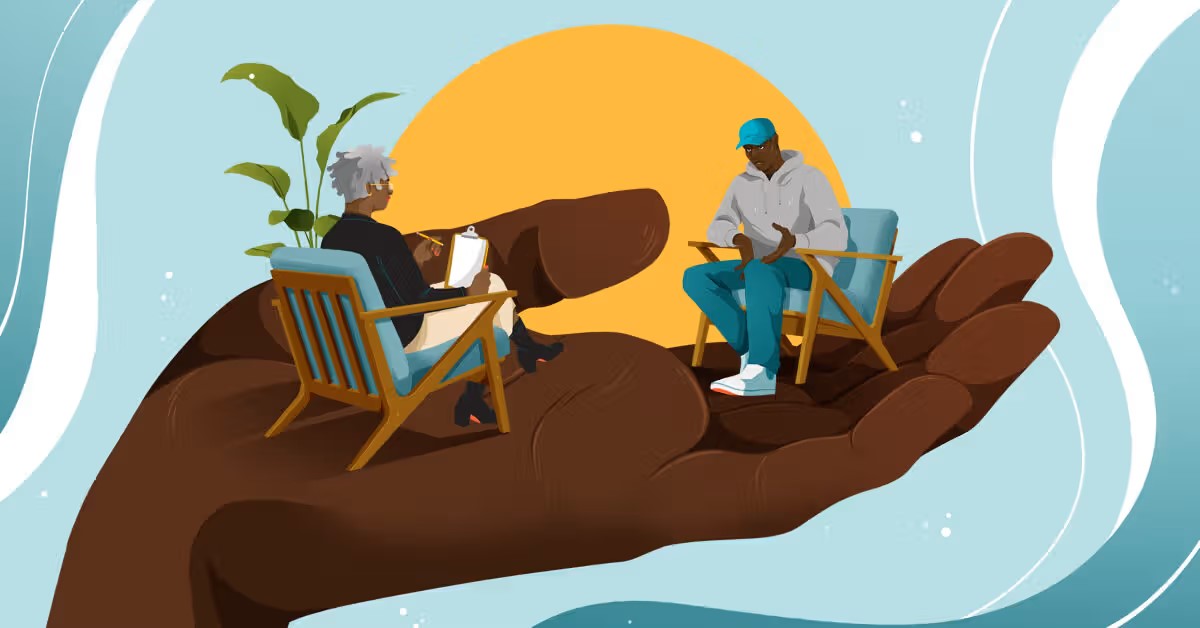
The silence surrounding mental health in the Black community is deafening. For generations, we’ve been taught to keep our struggles hidden, to suffer in secret rather than seeking help. But this silence comes at a devastating cost, exacerbating the mental health crisis affecting our community.
Studies have shown that Black individuals are 20% more likely to experience serious mental health issues, such as depression and anxiety, due to systemic racism and discrimination.
Yet, we’re less likely to seek treatment due to cultural norms that prioritize strength and resilience over vulnerability. This stigma surrounding mental health in the Black community needs to be addressed.
Mental Health In The Black Community
Award-winning Black-American actress Taraji P. Henson added her voice to destigmatizing mental health in the Black community through her foundation, the Boris Lawrence Henson Foundation. Henson has spoken publicly about her own struggles with anxiety and depression, and how she has found help through therapy.
“You know, in the Black community we just don’t talk about it. We have to be strong and tough, so much has happened to us over the course of history that we put on this front like we are strong and we pushed through, like the strong black woman and the strong black man. That’s what is actually killing us. The healing is in the vulnerability. That’s exactly what the strength is, in the vulnerability, not trying to pretend like you’re strong all the time.” Actress Taraji P. Henson, Mental Health Advocate.
Moreover, take for example, the story of Karyn Washington, a 22-year-old Black woman, founder of “For Brown Girls” and the #DarkSkinRedLip project who struggled with depression and anxiety. Despite her struggles, she felt pressured to present a perfect image on social media, fearing that her community would view her as weak.
Tragically, Karyn took her own life in April 2014. Her story, is a heartbreaking reminder of the consequences of silence and the importance of promoting mental health in the Black community.
We need to create a safe space for Black individuals to discuss their mental health without fear of judgement or rejection. This requires cultural sensitivity and an understanding of the unique experiences faced by our community.
By acknowledging the historical trauma that has led to our collective suffering, we can work towards healing, personal growth and self-care.
Dr. Jennifer Taylor, a Black psychologist, notes that traditional therapy often fails to account for the unique experiences of Black individuals, such as racism and discrimination. By developing culturally-sensitive treatment options, we can ensure that our community receives the support they need.
This includes supporting Black mental health professionals and researchers who understand our experiences.
By talking openly about mental health, we can reduce stigma and encourage seeking help. We can create online spaces, support groups, and community initiatives that provide a safe haven for Black individuals to share their struggles.
The Black Mental Health Alliance is a great example of an organization dedicated to providing resources and support for Black individuals struggling with mental health issues.
In essence, the silence surrounding mental health in the Black community is a ticking time bomb, waiting to unleash devastating consequences. It’s time to break the silence and start the conversation.
We owe it to ourselves, our community, and our future to prioritize mental health and promote vulnerability. Let’s create a world where Black individuals can thrive, without fear of judgement or rejection. Let’s break the silence and start healing.
Watch video here:
