


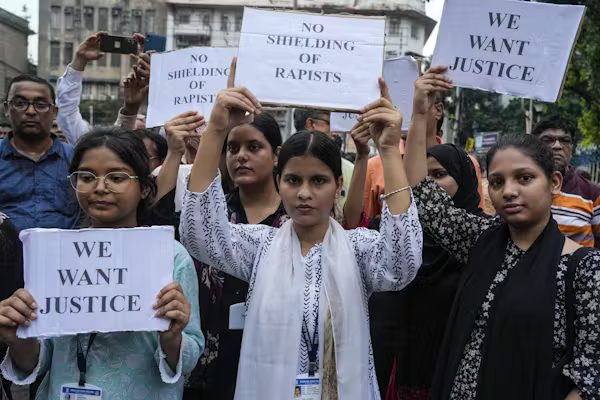
In a heart-wrenching incident that has deeply affected the nation, a 31-year-old female doctor was tragically found murdered at a government teaching hospital in Kolkata. This shocking crime has ignited widespread protest, with doctors and activists rallying across India to demand justice and enhanced protection for medical professionals.
Table of Contents
Nationwide Protests: “Reclaim the Night”
On Wednesday evening, a collective movement titled “Reclaim the Night” saw doctors and activists from various states, including West Bengal, Delhi, Karnataka, and Tamil Nadu, coming together in solidarity. This movement follows intense protests triggered by the incident at RG Kar Medical College in Kolkata, highlighting the broader issue of safety for medical personnel.
Dr. Mridul, a spokesperson for the protesting doctors, stated that demonstrations at the hospital campus will persist until justice is achieved. The protests have led to temporary halts in services at several medical centers, shedding light on the urgent need to address sexual violence and ensure the safety of doctors in India.

Details of the Incident
The body of the young doctor was discovered on August 9, showing signs of severe trauma. Initially, hospital authorities suggested a suicide, but an autopsy later revealed the devastating truth of rape and murder. This case echoes other tragic instances of sexual violence in India, such as the 2002 Gujarat riots and the assault on activist Soni Sori, reflecting ongoing challenges in the fight for justice for survivors.
Protest Movement Gathers Strength
In response to this tragedy, thousands of doctors took to the streets of Kolkata, advocating for improved security measures and justice for their colleagues. The Kolkata High Court has transferred the investigation to the Central Bureau of Investigation (CBI), a move many view as a step towards a thorough inquiry.
The Federation of Resident Doctors Association (FORDA) initially called for a nationwide strike, halting elective medical services.
Although some demands were addressed by Health Minister Jagat Prakash Nadda, other groups like the Federation of All India Medical Associations (FAIMA) continue their strike, pressing for a central law to protect doctors from violence and calling for accountability for those involved in the case.
Why the Protests Persist
Despite some governmental assurances, many doctors remain on strike, advocating for a central law that designates violence against doctors as a non-bailable offense. They also seek stricter enforcement of existing laws and swift action against those responsible for the doctor’s death.
Dr. Dhruv Chauhan of the Indian Medical Association’s Junior Doctors’ Network emphasized that ending the strike prematurely would undermine the quest for justice and the broader goal of ensuring safety and respect for medical professionals.

India’s Ongoing Battle with Sexual Violence
Sexual violence continues to be a critical issue in India, with an average of 90 rapes reported daily in 2022. Although stricter laws have been enacted following high-profile cases, enforcement and preventive measures remain inadequate.
Activist Vrinda Grover highlighted that without addressing underlying societal issues like patriarchy and discrimination, legal reforms alone will not suffice.
A Call for Comprehensive Change
This incident has particularly shocked Kolkata and prompted widespread criticism of both the hospital and local administration, with leaders like Rahul Gandhi calling for justice.
The CBI is now overseeing the investigation, with the Supreme Court monitoring its progress. The nation eagerly awaits the resolution of this case by October 9, hoping for justice and meaningful action.
The protests following the death of the Kolkata doctor underscore the urgent need for enhanced protection and justice for medical professionals and all women in India.
This tragedy reflects broader societal issues and the necessity for comprehensive reform to build a safer, more equitable society.
As the investigation unfolds, the hope is that this case will lead to significant changes that address both immediate and systemic issues of safety and justice.
