



The African Movie Viewers Choice Awards (AMVCA) recently left many stunned and disappointed when Funke Akindele’s masterpiece, “A Tribe Called Judah”, was overlooked in every category.
As a movie enthusiast and Theatre Arts graduate, I am compelled to express my discontent and dissect the excellence of this cinematic gem, questioning the awards team’s decision.
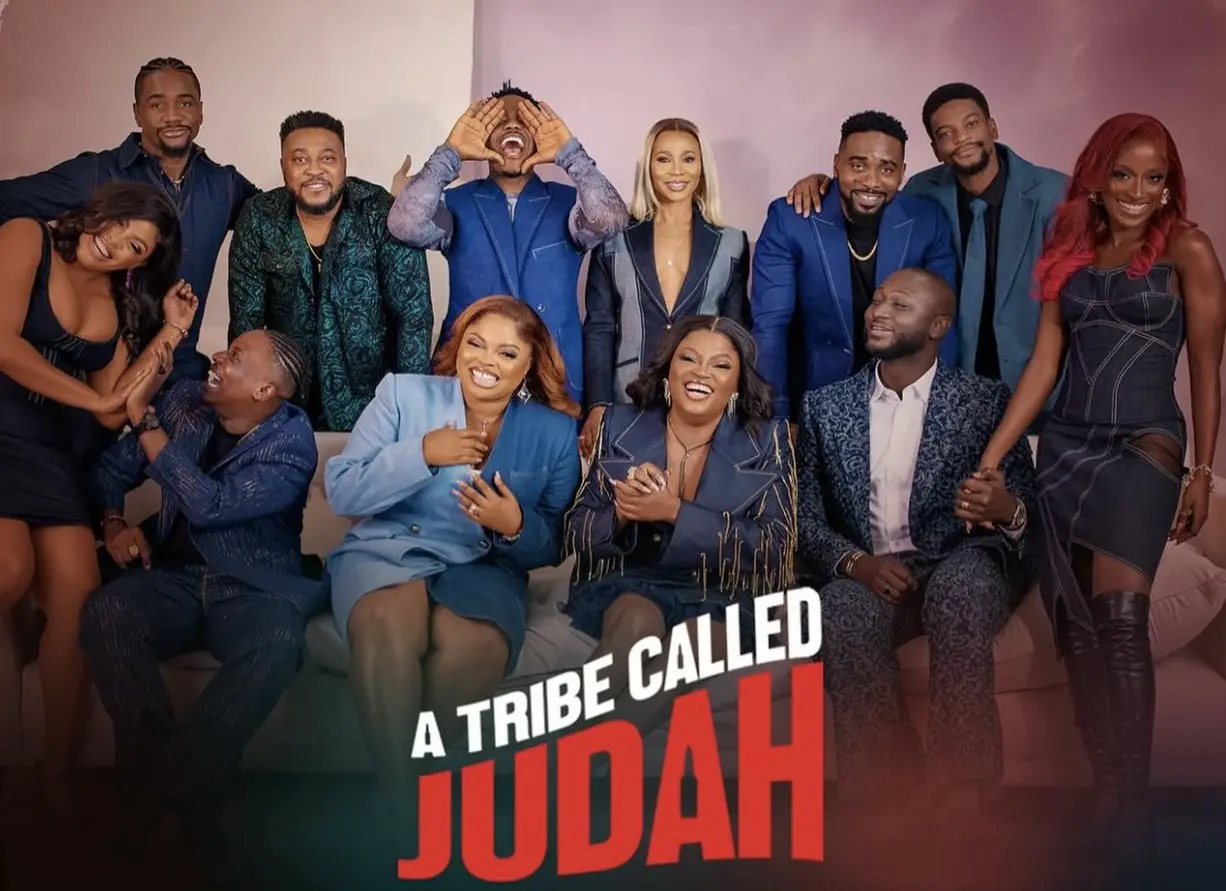
“A Tribe Called Judah” is more than just a movie; it’s a poignant reflection of our society’s harsh realities. Funke Akindele’s brilliant storytelling weaves a complex narrative that tackles domestic abuse, broken homes, alcoholism, armed robbery and the struggles of single motherhood.
Each scene is a masterclass in character development, with every actor delivering a riveting performance that tugs at the heartstrings.
A Tribe Called Judah’s Excellence
The movie’s central theme of family and support is expertly intertwined with the characters’ journeys, making it relatable and authentic. Funke’s character ’Jedidah’, a strong-willed mother, embodies the resilience of women who face adversity head-on.
Her relationship with her children is both heart-warming and filled with lessons, showcasing the struggles of parenting, the consequences of poor family upbringing and still showing love and care to your children.
The cinematography is breathtaking, with each frame meticulously crafted to capture the emotions and intensity of the scenes. The production quality is exceptional, with attention to detail that transports viewers into the world of the characters.
Powerful Scenes
“A haunting moment in ‘A Tribe Called Judah’ occurs when Funke Akindele’s character, Jedidah, is harshly rejected by her father after becoming pregnant from rape, highlighting the devastating consequences of sexual violence and the hurtful judgement of loved ones.
“Jedidah, you’re a disgrace to this family. How will I, Reverend Simon Judah, face the congregation when they find out that my daughter is pregnant? Out of wedlock! Jedidah, I disown you”, his father said.
This heart-wrenching scene sets the stage for Jedidah’s journey as a single mother, navigating the challenges of raising five sons fathered by different men.
With each new addition to her family, Jedidah’s struggles to provide for her children without their fathers’ support are deeply felt, making for a powerful and emotional portrayal of resilience and determination.
Amidst her own tribulations, Jedidah selflessly devotes herself to nurturing her children with unwavering love and care, putting their needs above her own.
A particularly emotional moment occurs when Adamu’s prospective father-in-law requests information about his paternal heritage and he had no knowledge about it.
“You said your father is from Dala local government of Kano State? Which part of Dala local government is your father from exactly? I mean which family compound is he from? Halima’s father asked.
However, Adamu’s mother refuses to disclose this information, leaving him feeling lost and uncertain about his roots. This poignant scene sheds light on the intricate web of family relationships, exposing the deep-seated pain and lasting scars that can shape one’s sense of self and place within the family.
“‘I’m at Halima’s place, Mummy. Please, I want to know the name of my father’s compound in Dala local government in Kano.’ ‘What kind of question are you asking me, Adamu? Do you want to remind me of my past? Do you want to spoil my mood?’ It’s just that Halima’s father keeps asking me so many questions. I’ve told him I’m from Kano and my father’s name is Bako, but he keeps asking. ‘He wants to know your roots. You’re Judah, Adamu. Judah is your root. That’s all you need to know. Because I don’t want to remember what your father and his family did to me.’ — Jedidah and Adamu, “A Tribe Called Judah”
Another chilling scene unfolds as Daddy Michael’s domestic abuse reaches a boiling point, with him viciously sabotaging Linda’s grocery business and physically mistreating her.
The situation takes a dramatic turn when Jedidah and her sons courageously intervene, standing up to the abusive husband and putting an end to the harrowing ordeal.
In a starkly contrasting scene, Jedidah’s self-destructive path is revealed, as her alcohol abuse, sparked by the traumatic experience of being disowned by her family, led to a debilitating kidney disease.
This powerful depiction lays bare the devastating consequences of attempting to numb emotional pain with substance abuse, ultimately leading to a downward spiral of worsening health and regret.
Then, Jedidah’s sons’ ill-fated decision to rob Emeka’s employer’s business to fund her medical bills ends in tragedy, serving as a cautionary tale that armed robbery is never a solution.
The production addresses complex social concerns with nuance and compassion, fostering a deeper understanding of these critical issues
In contrast, “Breath of Life” focuses on miraculous encounters and destiny helpers, a noble theme but one that lacks the depth and complexity of “A Tribe Called Judah”. While both movies deserve recognition, the snub of Funke’s masterpiece is a glaring oversight that raises questions about the awards team’s criteria and bias.
Was the awards team’s decision right? I firmly believe it was not. “A Tribe Called Judah” is a movie that lingers in your mind long after the credits roll, its impact resonating deeply. It’s a testament to Funke Akindele’s skill as a storyteller and her dedication to shedding light on societal issues.
In a nutshell, the AMVCA’s failure to recognize this excellence is a disservice to the movie industry and an insult to the hard work and passion of the cast and crew. It’s a reminder that sometimes, awards don’t always go to those who deserve them most.
As I reflect on this snub, I am reminded of the power of storytelling and its ability to touch hearts and minds. “A Tribe Called Judah” may not have won awards, but it has won something far more valuable – the hearts of its viewers.
Funke Akindele’s masterpiece will continue to inspire and educate, leaving a lasting impact on our collective consciousness.
Watch video here:
