


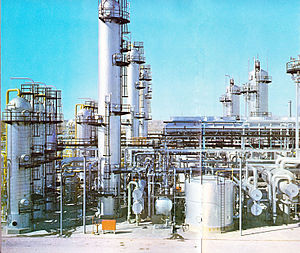
Under the leadership of President Nana Akufo-Addo, Ghana is poised to transform its energy landscape with the construction of a cutting-edge oil refinery.

This Oil Refinery
Is slated for completion by 2026, will not only transform Ghana’s oil and gas sector but also serve as a catalyst for economic growth, job creation, and regional energy security.
The proposed oil refinery, with a processing capacity of 150,000 barrels of crude oil per day, will be one of the largest and most modern in West Africa.
By leveraging advanced technology and innovative processes, the refinery will produce a range of high-quality petroleum products, including gasoline, diesel, jet fuel, and liquefied petroleum gas (LPG).
This will enable Ghana to reduce its reliance on imported fuel, ensuring a stable supply of energy for its growing economy.
One of the primary benefits of the oil refinery is its potential to stimulate local economic activity. By providing a reliable source of fuel, the refinery will support the growth of industries such as transportation, manufacturing, and agriculture.
For instance, the refinery’s production of LPG will help meet the increasing demand for clean cooking fuel, reducing Ghana’s dependence on charcoal and firewood.

Additionally, the refinery’s output of high-quality diesel will power the country’s industrial sector, including mining, construction, and manufacturing.
The oil refinery will also serve as a hub for economic diversification, attracting foreign investment and fostering the growth of related industries such as petrochemicals and manufacturing.
For example, the refinery’s production of petrochemical feedstocks will support the development of Ghana’s plastics and fertilizers industries, creating new opportunities for entrepreneurship and job creation.
In terms of job creation, the oil refinery is expected to generate thousands of employment opportunities, both during construction and operation. The project will require a workforce with diverse skills, including engineers, technicians, operators, and maintenance personnel.
Moreover, the refinery will also create indirect jobs in supporting industries such as logistics, transportation, and services.
Ghana’s move to build an oil refinery also underscores its determination to tap into the vast opportunities presented by the African Continental Free Trade Area (AfCFTA). By becoming a net exporter of refined petroleum products, Ghana can benefit on the growing demand for energy across the continent, further solidifying its position as a regional economic powerhouse.
While challenges and concerns surrounding environmental impact and project financing remain, the Ghanaian government’s commitment to this project, led by President Akufo-Addo, is a step in the right direction.
With careful planning, execution, and regulation, the oil refinery can become a beacon of economic prosperity for Ghana and a model for other African nations to follow.
Finally , Ghana’s bold move to build a state-of-the-art oil refinery is a testament to its commitment to economic growth, energy security, and regional cooperation.
By leveraging advanced technology and innovative processes, the refinery will not only transform Ghana’s oil and gas sector but also create new opportunities for entrepreneurship, job creation, and economic diversification.
As the project progresses, it is essential to ensure that environmental and social concerns are addressed, and that the benefits of the oil refinery are shared equitably among all stakeholders.
Watch video here:
