


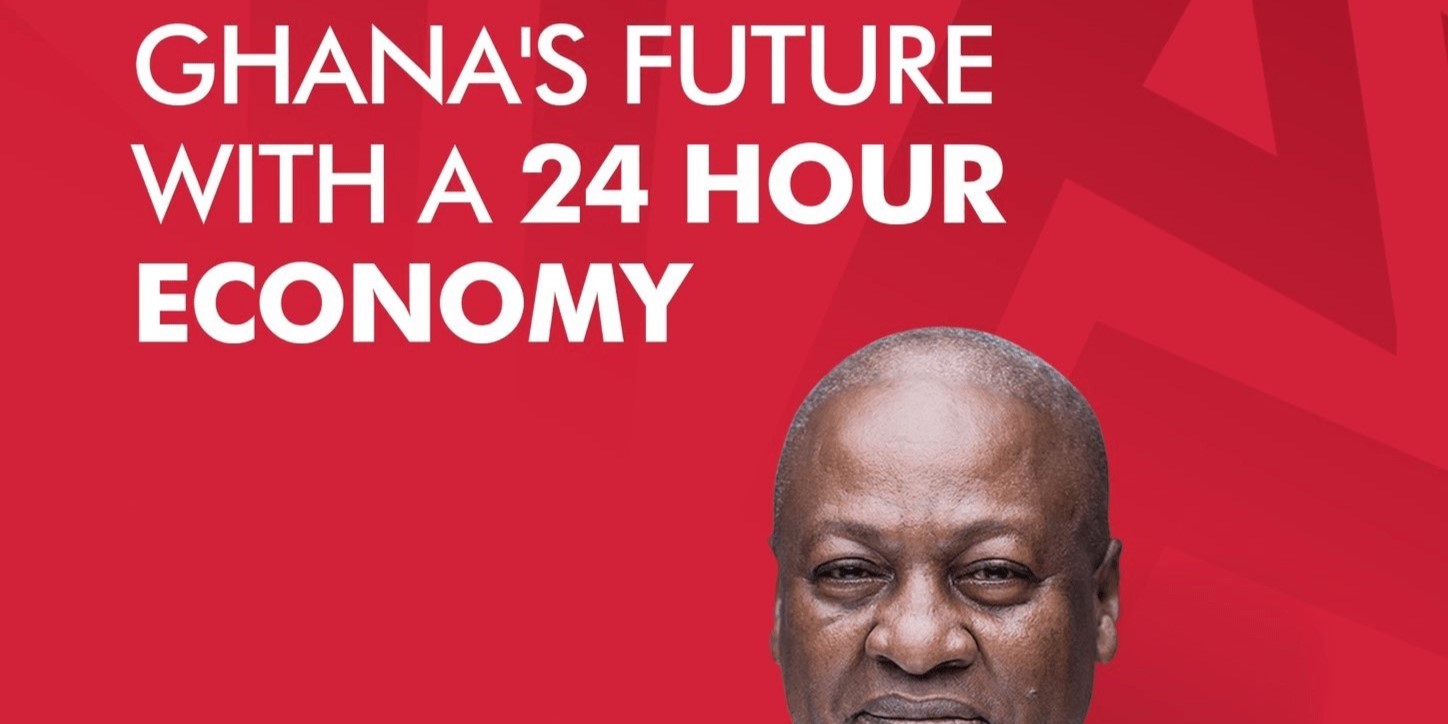
The National Democratic Congress (NDC) has proposed a 24-hour economy policy, aiming to boost economic activity by extending business hours.
Malik Basintale explained on Metro TV’s Good Afternoon Ghana Show “The 24-hour economy is a policy that is meant to create sustainable jobs. By creating all those jobs, what the policy seeks to do is by enrolling all businesses that have the capacity to recruit more but are still underperforming, is to force them into a state where they can absolve the remaining people to meet up their productivity lapses.”
The idea is to encourage businesses to operate beyond the traditional 8-hour day, creating a vibrant and dynamic economy that never sleeps. However, the policy has faced criticisms regarding its feasibility and clarity. One of the main concerns is the lack of a clear implementation plan.
Critics argue that the policy is unrealistic and fails to address the country’s energy challenges, such as power outages. They question how a 24-hour economy policy can be sustained without a reliable energy supply.
Additionally, some argue that the policy ignores the potential negative impacts on workers’ welfare and the environment. Extending business hours could lead to increased stress and fatigue for employees, as well as higher energy consumption and carbon emissions.
Others worry about the impact on small businesses and entrepreneurs, who may struggle to adapt to the new demands of a 24-hour economy.
24-Hour Economy Policy
Despite these criticisms, some Ghanaians believe the policy has potential. They argue that it can create jobs, stimulate growth, and modernise the economy. Proponents suggest that the policy can increase raw material production, add value to finished goods, and boost exports.
They also point to the success of 24-hour economies in other countries, such as Singapore and Dubai. To succeed, Mahama’s 24-hour economy policy requires a clear roadmap, addressing the concerns and challenges raised by critics.
This includes developing a comprehensive implementation plan, investing in energy infrastructure, and mitigating potential negative impacts on workers and the environment.
The NDC must also engage with stakeholders, including businesses, labor unions, and civil society organizations’, to ensure a smooth transition.
Furthermore, the policy must be accompanied by supporting infrastructure, such as transportation and security services, to facilitate the extended business hours. The NDC government would have to also provide incentives for businesses to adopt the new policy, such as tax breaks or subsidies.
To end it here, Mahama’s 24-hour economy policy is an ambitious plan that requires careful consideration and planning. While it has the potential to boost economic activity and create jobs, it also poses significant challenges that must be addressed.
