


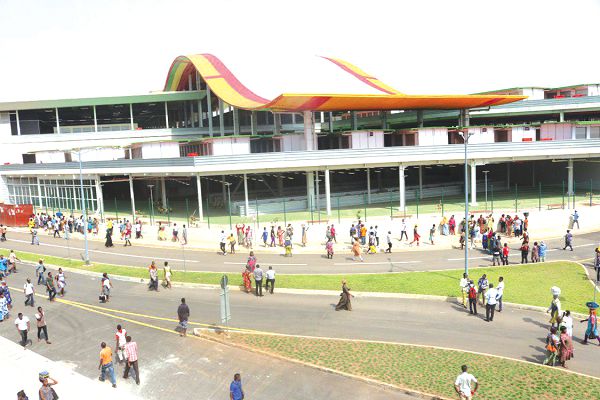
The Kejetia Market in the Ashanti Region, the largest single market in West Africa and a cornerstone of Ghana’s economy has been plunged into darkness due to an outstanding debt owed to the Electricity Company of Ghana (ECG).
This latest power cut, which took effect on Monday, 12 August, is not just an inconvenience; it threatens the livelihood of thousands and the very fabric of Kumasi’s bustling trade hub.
Table of Contents
Kejetia: A Market of Monumental Importance
Kejetia Market, known officially as the Kumasi Central Market, is far more than just a place to buy and sell goods. With over 10,000 stores and stalls, it is a sprawling economic ecosystem that supports the livelihoods of countless Ghanaians.
The market is not only a commercial center but also a community space, featuring facilities such as a daycare school, a hospital, and banks, all designed to support the traders and their families.
The importance of Kejetia Market to Kumasi and Ghana at large cannot be overstated. It has been a central part of the region’s economic life for decades, drawing traders and customers from all over West Africa.
The market’s massive redevelopment, which began in 2015, was a testament to its significance. The project, valued at US$259.4 million for the first phase alone, transformed Kejetia into an ultra-modern trading hub, complete with a clinic, police station, mosque, and other essential facilities.

A History of Challenges: Fires, Flooding, and Now Power Cuts
The Kejetia market has not been without its challenges. Over the years, the market has been plagued by multiple crises, from devastating fires to flooding, each threatening the livelihood of the thousands who depend on it. Fire outbreaks have been particularly destructive, with one in March 2023 gutting 50 shops and causing millions of Ghana cedis in damage. Additionally, the market has been flooded multiple times, with burst pipes destroying goods and disrupting operations.
These issues have compounded the difficulties faced by traders, who are now grappling with yet another crisis: a power cut due to unpaid debts. This is not the first time Kejetia has been taken off the national grid. In June 2022, the market was disconnected over a similar issue, only to have power restored after a partial payment of its GHC5.2 million debt.

The Current Crisis: A Looming Economic Catastrophe
The current disconnection is the latest in a series of financial troubles for Kejetia Market. Despite numerous warnings and a payment plan in place, the market management has defaulted on payments, leading to debt.
The ECG’s decision to cut off power has sparked outrage among traders, who are now calling for the removal of the market’s managing director, Edmond Kofi Duffuor.
According to Modern Ghana, Duffuor has expressed his frustration with the situation. He stated that as of June, the market has paid GHS 1.7 million out of a total debt of GHS 9.7 million. He emphasized that the market is committed to paying off the debt and questioned the necessity of being cut off from electricity when they are actively trying to resolve the issue. Currently, the market relies on a costly generator for operations, which adds significant financial strain.
Asasae Radio reports the grievances of traders. “This managing director is the problem. He must go. Since this market was established, I have been paying outrageous bills,” one trader lamented. “Every time he is on our neck, chasing us for bills, but now we have been disconnected. This will adversely affect my business. The situation is making us scared because when the lights are off, some criminal elements will take advantage, and the heat is also unbearable.”
The power cut has not only disrupted daily business but also raised serious concerns about safety and security. With no electricity, the market’s already challenging environment has become even more dangerous, as criminals might exploit the situation, and the heat becomes intolerable.
A Broader Implication for Ghana
The crisis at Kejetia Market is not just a local issue; it has broader implications for Ghana’s economy and governance. The market is a vital economic engine, and its struggles reflect larger challenges in the country’s infrastructure and financial management.
The repeated disconnections and ongoing debt issues raise questions about the sustainability of large-scale public projects and the effectiveness of market management in handling such a significant enterprise.
Moreover, the situation at Kejetia serves as a stark reminder of the importance of reliable utilities and financial planning in maintaining public spaces that serve large populations. The market’s management and the government must find a sustainable solution to these recurring issues, as the market’s future—and the livelihoods of thousands—hang in the balance.
As the standoff continues, the leadership of the traders is planning to petition relevant institutions, including the office of the Asantehene, to address the debt issue and restore power to the market. The blackout has brought Kejetia Market to a critical juncture, and how this crisis is resolved could set a precedent for the management of public markets across Ghana.
