


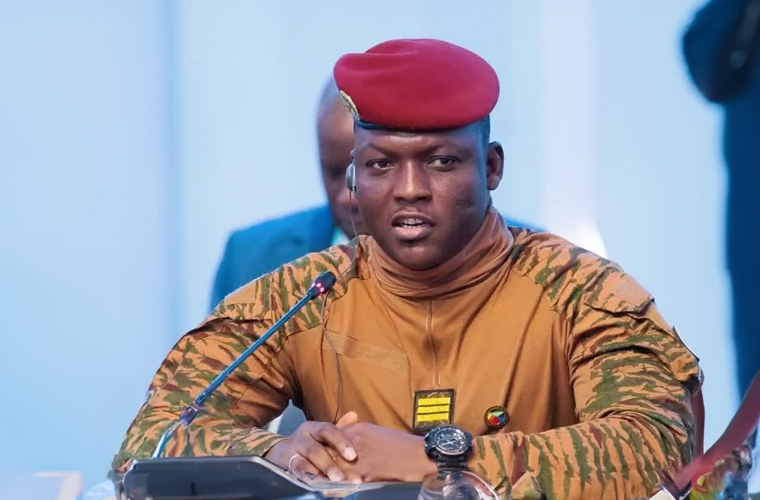
Since assuming office in October 2022, Interim President Ibrahim Traoré has prioritized security, stability, and healthcare in Burkina Faso.
His presidency has been marked by a firm commitment to security, intensifying military operations against extremist groups, including the Islamic State in the Greater Sahara (ISGS) and the Jamaat Nasr al-Islam wal Muslimin(JNIM).
Traoré’s Policies and Initiatives
He has also initiated reforms to reorganize the defense and security forces, including the creation of a new military unit dedicated to counter-terrorism.
In addition to his security efforts, Traoré has launched initiatives to rebuild and restore infrastructure in areas affected by terrorism, aiming to improve living conditions and boost economic activity.
He has strengthened regional partnerships to combat terrorism, including collaborations with neighboring countries and international organizations. Furthermore, Traoré has introduced programs to engage and empower youth, aiming to reduce radicalization and promote social cohesion.
One of his most notable achievements has been his focus on healthcare. He has donated medical equipment and supplies to hospitals and healthcare centers across the country, launched a national vaccination campaign to combat infectious diseases, increased funding for healthcare infrastructure development and staff training, and provided humanitarian aid to displaced persons and communities affected by terrorism.
On July 25, 2024, President Traoré handed over a significant donation of medical equipment and vehicles to the Ministry of Health, including 15 mobile clinics, 36 vehicles, 3 oxygen production units, 11 cold rooms, 835 tablets, 1900 solar refrigerators, 110 freezers, and 14 generators.
He is one of the few African leaders alongside President Paul Kagame who are working effortlessly to ensure the continent develop and grow.
This generous donation aims to enhance healthcare services in rural and underserved areas.
To sum it up, while Traoré’s presidency has shown promise, challenges persist. The country continues to face security threats, and the humanitarian situation remains dire. Looking ahead, Traoré’s government must balance security concerns with democratic governance, economic development, and social welfare.
